

Traditional Chinese Medicine (TCM) boasts a long-standing history and profound wisdom, holding unique and in-depth insights into human life activities. In TCM theories, "Qi" is regarded as the fundamental substance sustaining human life activities and occupies an irreplaceably vital position. Suwen·Treatise on the Six Subtle Mechanisms states: "When exhalation and inhalation cease, the vital spirit dissipates; when ascending and descending movements stop, the rooted Qi is left precarious." This clearly illustrates that the movement of Qi activity is the external manifestation of vitality, and the unobstructed circulation of Qi determines human health and vitality. From a TCM perspective, hyperbaric oxygen falls under the category of "Qi" and exerts distinctive effects on safeguarding human health.
Qi and blood deficiency constitutes the core pathological mechanism underlying sub-health, and is closely associated with all symptomatic manifestations of sub-health. So what exactly is sub-health? It refers to a special physiological state teetering on the borderline between health and illness. Individuals experience a variety of physical and mental discomforts that do not meet clinical diagnostic criteria for any disease. This neither healthy nor diseased condition is termed the "Third State" by the World Health Organization (WHO), while it is known as sub-health in China. It presents a wide array of common symptoms: physical manifestations include persistent fatigue, sleep disorders, bodily pains, dizziness and poor appetite; mentally, sufferers endure memory loss, poor concentration, slow thinking, sluggish responses, and even depressive moods and other distressing minor ailments, which severely impair quality of life.
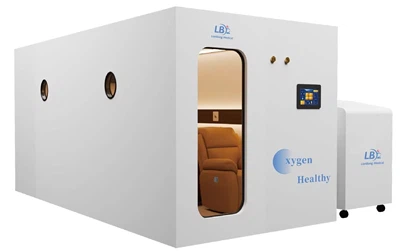
Mild hyperbaric oxygen therapy delivered by mild hyperbaric oxygen chambers offers an effective solution to mitigate sub-health conditions. Modern medical research has proven that mild hyperbaric oxygen therapy inside the chamber can mitigate oxidative stress, boost cellular regeneration capacity, and effectively repair bodily tissue damage. Further analyzed through a TCM lens, the therapeutic effects of hyperbaric oxygen are closely intertwined with four types of human Qi: clear Qi, grain Qi, pectoral Qi and primordial Qi.
Among the functional systems of human zang-fu organs, the lung governs Qi and respiration, performing the exchange of stale and fresh air. Mild hyperbaric oxygen therapy assists the lungs in expelling turbid Qi and absorbing clear Qi, enabling smooth circulation of clear Qi throughout the body. The spleen dominates transportation and transformation, serving as the source of Qi and blood production. This oxygen therapy aids the spleen in processing nutrients from food and water to replenish grain Qi, supplying the body with ample nourishment. The heart governs blood vessels and propels blood circulation; mild hyperbaric oxygen therapy strengthens heart Qi to drive blood flow, facilitating unimpeded circulation of pectoral Qi to nourish the entire body. The kidney controls Qi reception and acts as the foundation of innate constitution. The therapy supports the kidneys in storing clear Qi, replenishing primordial Qi and reinforcing the fundamental vital energy of the human body.
Via the Qi transformation functions of the lung, spleen and kidney, oxygen carried in the blood circulates fully to all parts of the body to nourish the five zang and six fu organs. After Qi is drawn back to its kidney origin, primordial Qi becomes abundant. Qi ascends to nourish the brain, clarifying mental consciousness, sharpening thinking and uplifting spirits. Consequently, all discomforts induced by sub-health are effectively relieved, restoring physical vitality and allowing people to embrace a healthy and fulfilling life.