

There are exactly three ways to get medical oxygen into a hospital
pipeline. Liquid oxygen delivered by truck. High-pressure cylinders
delivered by truck. Or an on-site generator that makes it from ambient
air. Every hospital uses at least one of these. Many use a combination.
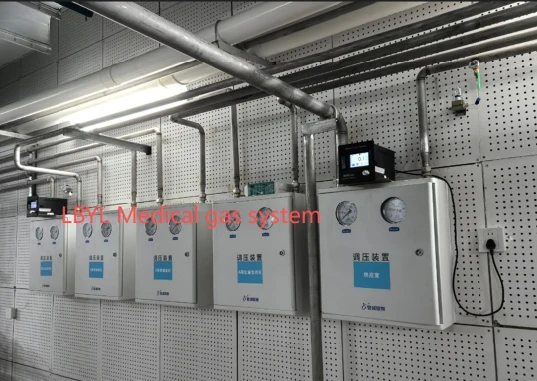
The question is: which makes sense for your facility, right now?
I've spent years analyzing hospital oxygen supply decisions across Asia,
the Middle East, and Europe. The answer always depends on three variables:
your consumption volume, your location's supply chain reliability, and
your tolerance for recurring operational costs. Let me walk through each
option honestly - with real numbers, not brochure claims.
How It Works
Oxygen is cooled to minus 183 degrees Celsius until it liquefies,
occupying 1/860th of its gaseous volume, stored in a vacuum-insulated
cryogenic tank on your hospital grounds, and vaporized back to gas before
entering your pipeline. The tanks are typically leased from a gas supplier
who also delivers the liquid oxygen on a schedule - or on demand when you
call because your usage spiked unexpectedly.
Real Costs
The infrastructure looks cheap upfront because the gas company often
subsidizes the tank installation in exchange for a long-term supply
contract. Don't mistake this for low cost. You're renting the tank and
buying oxygen by the cubic meter at rates that fluctuate with diesel
prices, since most deliveries run on trucks.
In Southeast Asia, liquid oxygen for medical use currently runs
$0.40-$0.80 per cubic meter at typical hospital volumes. A 300-bed
hospital consuming roughly 3,000 cubic meters per month pays
$14,400-$28,800 per year on oxygen alone - before tank rental, delivery
surcharges, and the inevitable emergency after-hours delivery fees.
Then there's boil-off. Even the best cryogenic tanks lose 0.3-0.5 percent
of their contents per day to evaporation. In tropical climates, that
figure climbs. Over a year, a hospital might pay for oxygen that literally
vanishes before reaching a single patient.
Supply Chain Risk
Liquid oxygen depends on a functioning supply chain: the ASU (air
separation unit) that produces it, the truck that transports it, the road
that the truck drives on, and the driver who shows up. Any break in this
chain - a typhoon, a fuel shortage, a driver strike, a road closure - and
your oxygen supply stops. Hospitals in cyclone-prone regions know this
risk intimately.
During the 2020 COVID surges, several hospitals in Southeast Asia watched
their LOX suppliers prioritize larger customers. Contracts didn't matter
when demand outstripped production capacity. The hospitals with on-site
generators kept running. Those relying solely on LOX faced terrifying
hours of uncertainty.
Best For
LOX makes sense for: very large hospitals (800+ beds) with consistent,
high-volume consumption where the unit economics justify the supply chain
dependency; facilities with a reliable backup system (generator or
cylinder manifold); and hospitals in urban areas with multiple competing
LOX suppliers and good road infrastructure.
Option B: High-Pressure Cylinders (Manifold Systems)
How It Works
Oxygen is compressed to 150-200 bar in steel or aluminum cylinders,
connected to a manifold that automatically switches between banks as
cylinders empty. A primary bank supplies while a secondary bank stands
ready. When the primary bank depletes, the manifold switches over and
triggers an alarm telling staff to replace the empty cylinders.
Real Costs
Cylinder oxygen is the most expensive option per cubic meter - often
$1.00-$3.00 per cubic meter depending on region and volume, because you're
paying for steel, transport, handling labor, and cylinder rental on top of
the gas itself. For a 100-bed hospital using 1,500 cubic meters per month,
that's $18,000-$54,000 per year.
But that's not the real problem. The real problem is logistics. Cylinders
are heavy - a full size-G cylinder weighs about 70 kg - require manual
handling, need to be stored safely (chained, segregated by full/empty
status, protected from heat sources), and create a constant flow of
delivery trucks and manual labor. Hospital porters moving cylinders
through corridors is not a dignified use of healthcare staff time.
Best For
Cylinder manifolds work as: backup systems behind a primary generator or
LOX tank; interim solutions during construction or renovation; primary
supply for very small facilities under 50 beds where the capital cost of a
generator can't be justified; and remote clinics with unpredictable
patient volumes.
Option C: On-Site PSA/VPSA/VSA Generator
How It Works
Ambient air - which is 21 percent oxygen - gets filtered, compressed,
dried, and passed through a bed of zeolite molecular sieve. The sieve
preferentially adsorbs nitrogen, allowing oxygen at 93 percent plus or
minus 3 percent purity to pass through into your pipeline. The nitrogen
gets released back to the atmosphere during the desorption cycle. The
process repeats continuously, producing oxygen on demand, 24/7.
Within 'generator,' there are three technology generations worth
understanding:
PSA (Pressure Swing Adsorption): compresses air to 0.5-0.75 MPa, uses oil-
lubricated screw compressors, requires multi-stage filtration to remove
oil vapor. Energy consumption: 1.5-2.5 kW/Nm3.
VPSA (Vacuum Pressure Swing Adsorption): compresses air below 0.1 MPa,
uses oil-free compression, vacuum-desorbs nitrogen. Energy consumption:
0.7-1.2 kW/Nm3.
VSA (Vacuum Swing Adsorption): same low-pressure, oil-free principle as
VPSA but with only three core components (air handling unit, separation
tower, oxygen processor) integrated through a single rotary assembly.
Energy consumption: 0.6-1.0 kW/Nm3.
Real Costs
A PSA or VPSA generator is a capital investment. For a 300-bed hospital
needing roughly 25-40 Nm3/h, expect to budget $80,000-$200,000 depending
on technology choice, redundancy configuration, and regional installation
costs.
But the operating economics flip the story. At $0.10/kWh, producing a
cubic meter of oxygen via VPSA costs roughly $0.07-$0.12. Via PSA, roughly
$0.15-$0.25. Compare to LOX at $0.40-$0.80 and cylinders at $1.00-$3.00.
For a 300-bed hospital consuming 3,000 cubic meters per month:
- VPSA generator: ~$250-$430/month in electricity + ~$400/month
amortized maintenance = $650-$830/month
- LOX: ~$1,200-$2,400/month in gas cost + tank rental + delivery fees
- Cylinders: ~$3,000-$9,000/month
The generator pays for itself in 2-4 years. After that, it's pure savings
for the next 15+ years of equipment life.
Supply Chain Risk
Near zero - as long as you have electricity. A generator's feedstock is
ambient air, which is abundant and free. The only supply chain
dependencies are filters (replaced every 5,000 hours) and the molecular
sieve (10+ years life in VPSA/VSA systems). No truck deliveries. No
supplier negotiations. No boil-off. No cylinder handling injuries.
The Hybrid Approach
Most well-managed hospitals use a combination: a VPSA or VSA generator as
primary supply, backed by a LOX tank or cylinder manifold for emergency
redundancy. This gives you the operating economics of on-site generation
with the belt-and-suspenders safety of a backup system that requires no
electricity.
One hospital group in Thailand operates this model across five facilities:
VPSA generators as primary supply, with LOX tanks maintained at minimum
fill level strictly for emergency backup. The generators handle 95 percent
plus of annual oxygen consumption. The LOX tanks are insurance. Their
annual oxygen costs dropped 58 percent after switching from LOX-only to
VPSA-primary.
Decision Framework
If you're evaluating oxygen supply options right now, start with three
questions:
1. What's your actual 12-month consumption data? Not design estimates -
real meter readings.
2. What's your local electricity rate? This determines generator economics.
3. How reliable is your LOX supply chain - in monsoon season, during fuel
price spikes, during public health emergencies?
With those three answers, the math usually makes the decision for you.