

Most hospital oxygen generator purchases follow a pattern: the procurement
department issues an RFQ based on a specification written by someone who
hasn't directly operated an oxygen plant in five years. Three suppliers
submit proposals. The cheapest one wins. Three years later, the biomedical
engineering team wonders why the maintenance costs are double what the
proposal estimated.
This doesn't have to happen. A hospital oxygen generator is a 15-20 year
capital investment. Asking the right eight questions before purchase
separates proposals that represent genuine value from proposals that are
merely cheap.
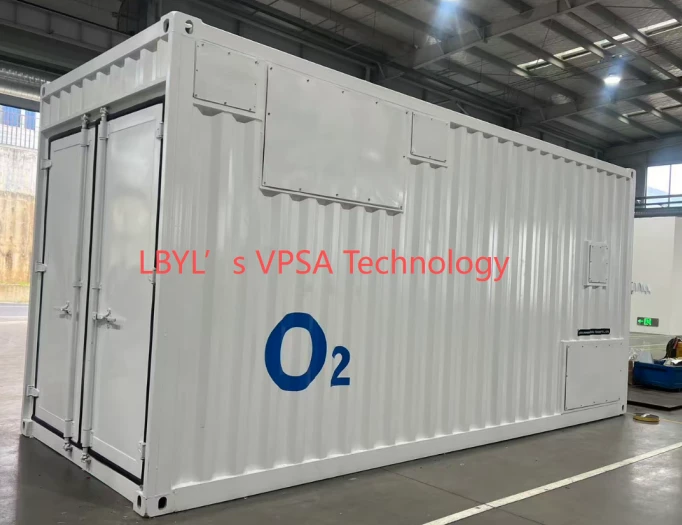
Question 1: What Technology Are You Actually Proposing -And Why?
Ask the supplier to name the technology: PSA, VPSA, or VSA. Then ask why
they're proposing that specific technology for your hospital. If the
answer is 'this is what we manufacture,' they're proposing what they have,
not what you need. If the answer includes a discussion of your hospital's
size, demand profile, electricity rate, climate, and altitude, the
supplier has actually thought about your requirements.
Question 2: What's Your Guaranteed Specific PowerConsumption
- And What Happens If You Exceed It?
This is the most important number after the purchase price. Ask for the
specific power consumption (kW/Nm3) with a contractual guarantee and
defined remedies. If the supplier won't commit to a specific number with
financial consequences, their energy efficiency claims are marketing, not
engineering.
Question 3: What Molecular Sieve Type Are You Using, and
What's the Warranted Replacement Interval?
Lithium-LSX: highest capacity, 10+ year life, higher cost. Sodium:
standard PSA-grade, 2-4 year life, lower cost. Ask: what type, what's the
warranty period, what factors void the warranty, and what's the cost for a
full replacement at today's prices?
Question 4: Is Your Compression Truly Oil-Free - Or Oil-
Lubricated With Filtration?
This distinction matters enormously. Oil-free means no oil in the
compression chamber, period. Oil-lubricated with filtration means oil IS
present and the system relies on filters to remove it. Ask: 'What happens
if the coalescing filter fails? Does your system detect increased oil
carryover and shut down, or does it continue operating while oil
contaminates the molecular sieve?'
Question 5: Where Are Your Service Engineers, and What's
the Guaranteed Emergency Response Time?
Medical oxygen equipment can't wait three days for a service engineer if
it fails on a Friday evening. Ask about: nearest service engineer
distance, guaranteed response time, availability of remote diagnostic
capability, and local spare parts inventory versus factory-sourced parts.
Question 6: How Does Your System Perform at Our Altitude and Climate?
Most manufacturers rate systems at ISO standard conditions: 20 degrees
Celsius, sea level, 60 percent RH. If your hospital is at 1,500 meters
where summer temperatures exceed 35 degrees Celsius, the ISO rating is
irrelevant. Ask for derated output at YOUR site conditions. For high-
altitude installations above 2,000 meters, ask about altitude-specific
design adaptations.
Question 7: What Monitoring and Predictive Maintenance
Capabilities Does the System Include?
Ask about: remote monitoring capability, predictive alerts that detect
parameter drifts before failure, historical data logging and export
capability, and automatic parameter optimization versus fixed setpoints.
Question 8: Can We Visit a Reference Site Running This
Same System for 3+ Years?
The reference site visit is the single most valuable procurement step. Ask
to speak with: the biomedical engineering team lead (maintenance reality),
the facility manager (installation experience), and if possible, a
respiratory therapy representative (end-user perspective). Three years
minimum operation. Hospitals that have lived with the equipment through
multiple seasons, several maintenance intervals, and at least one
unexpected event can give you the real story.
The Most Important Question You Won't Ask a Supplier
The question to ask yourself: 'Who on our evaluation team actually
understands oxygen generator technology?' If the answer is 'nobody - we're
relying on the proposals to educate us,' stop the procurement process.
Bring in a biomedical engineer with oxygen plant experience from another
hospital or consulting firm. Pay them for a week to review proposals,
visit reference sites, and advise the selection committee. The cost of
that consultation is trivial compared to the cost of buying the wrong
oxygen plant. And once it's installed, you'll live with that decision for
15-20 years. Make it an informed one.