

One of the selling points of VSA oxygen systems is low maintenance.
Compared to PSA, the burden is genuinely minor. But 'low maintenance'
doesn't mean 'no maintenance,' and a hospital that neglects the basics
because the brochure said it was trouble-free will eventually learn an
expensive lesson.
This guide covers what biomedical engineering teams actually need to do to
keep a VSA oxygen generator running reliably year after year. The task
list comes from real maintenance records. The cost data is current as of
2025 for the Asia-Pacific region.
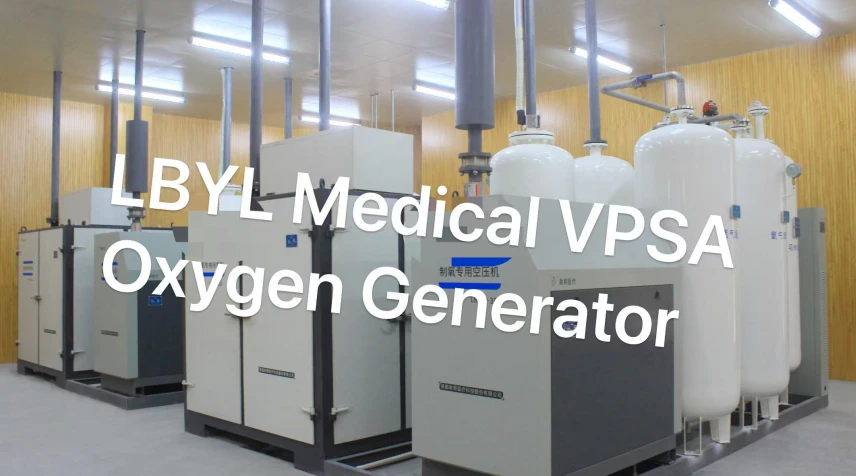
The VSA Maintenance Difference
- No oil system: no oil changes, no oil filters, no separator elements,
no condensate treatment
- No multi-stage filtration: no coalescing filters, no carbon filters
- No pressure vessels: no certification inspections (system operates
below 0.1 MPa)
- Long-life molecular sieve: no top-ups or replacements within 7-10 years
- Integrated design: fewer discrete components, fewer interconnection
failure points
Maintenance Schedule Overview
Daily (2 Minutes)
Walk past the control panel and glance at the display. Oxygen purity: 93
percent. Output: within normal range. No active alarms. If your system has
remote monitoring, this can be done from a smartphone - you don't need to
physically visit the equipment room unless the data suggests something is
off.
Every 5,000 Operating Hours (~7 Months)
- Replace ambient air intake filter. Cost: $30-$60 per element. Labor:
30-60 minutes.
- Inspect intake ducting for damage, blockage, or water ingress.
- Check all accessible hose connections and clamps for tightness.
Vibration loosens connections over time.
Annual Service (Schedule During a Low-Demand Period)
This is the main maintenance event, performed by the manufacturer's
service engineer or a trained biomedical technician. Typical duration: 4-6
hours.
1. Air handling system: check blower/compressor for noise or vibration,
inspect drive belts, clean heat exchanger surfaces, check electrical
connections.
2. Oxygen separation unit: verify cycle timing against commissioning data,
inspect control valve actuators, check vacuum pump.
3. Oxygen treatment: replace bacteria filter ($150-$300), service oxygen
booster ($300-$600 for seal/gasket/oil kit), inspect check valves.
4. Instrumentation: calibrate oxygen analyzer against certified reference
gas, test all alarm functions, verify remote monitoring data transmission,
update firmware if available.
5. Documentation: record all findings, parts replaced, calibrations
performed. Update equipment log. File calibration certificates.
Real-World Parts Costs (2025, Asia-Pacific)
- Air intake filter: $30-$60 (every 5,000 hours)
- Oxygen bacteria filter: $150-$300 (annually)
- Oxygen analyzer sensor: $400-$800 (every 2-3 years)
- Control valve rebuild kit: $200-$500 (as needed, typically 3-5 years)
- Drive belt set: $150-$300 (every 3-5 years)
- Manufacturer service visit: $1,000-$2,000 (annual)
Total annual: $2,500-$4,500 for a dual-unit installation. Compare to PSA:
$15,000-$25,000/year.
What Actually Breaks (Field Data, 5+ Years)
1. Control valves: cycling every 60-120 seconds, 500,000-1,000,000 cycles
per year. Rebuild at 3-5 year intervals.
2. Oxygen analyzer sensors: finite service life, 2-3 years. Consumable
item that degrades predictably.
3. Electrical connections: vibration loosens terminals. Annual tightening
prevents intermittent faults.
4. Vacuum pump: bearing wear after 5-7 years. Vibration monitoring catches
developing problems.
What Doesn't Break
- The molecular sieve bed: 10+ year life in oil-free VSA
- The adsorption tower structure: no pressure vessel fatigue at sub-0.1
MPa
- The main compressor/blower: bearings sized for continuous duty, no oil
system to fail
- Control system electronics: solid-state, no moving parts, designed for
industrial environments
Setting Up Your Maintenance Program
1. Designate one biomedical engineering technician as the oxygen system
lead. Send them to manufacturer training.
2. Set up a digital maintenance calendar with automatic reminders for the
5,000-hour and annual tasks.
3. Stock one set of consumable parts at the hospital: air intake filter,
oxygen bacteria filter, drive belts.
4. Ensure the remote monitoring system actually reaches someone who checks
it. Unchecked remote monitoring creates a false sense of security.
5. Review maintenance records annually with the manufacturer's service
engineer. Look for trends: declining purity between calibrations?
Compressor drawing more current? These are early warnings.
A well-maintained VSA oxygen system should operate for 15-20 years with
predictable, manageable costs. The roughly 10 technician-hours per year of
direct maintenance labor for a dual-unit system makes the VSA oxygen plant
likely the least demanding major equipment system in the hospital -
provided you actually perform the maintenance it does need.